 Sergio Armaroli











FOCUS
As I started to review this set, it suddenly struck me that except for the modern jazz Italian player Sergio Armaroli, I haven’t heard any new vibes players in recent years, so I went online to check them out.
—© 2023 Lynn René Bayley
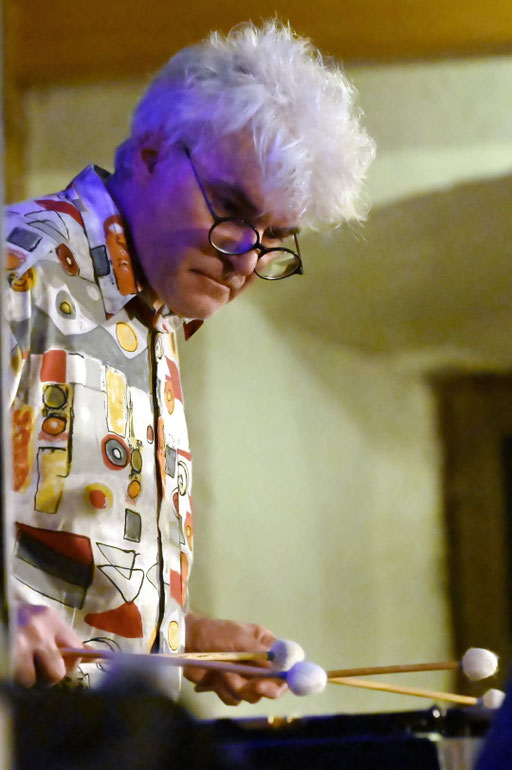
Der in Mailand geborene Vibrafonist Sergio Armaroli ist ein vielschichtiger Musiker, ein außergewöhnlicher Katalysator, der eine seine einzigartige Vision künstlerisch auslebt. Innerhalb kürzester Zeit war er an einer Vielzahl von Projekten beteiligt, bei denen er mit so unterschiedlichen Musikern wie Roger Turner, Elliott Sharp, Harri Sjöström und Giancarlo Schiaffini aufnahm. Sein Vibraphonspiel ist positiv, virtuos und hat einen schönen Inhalt. Unglaublich, wie viel Klang aus einem Musikinstrument herausgeholt werden kann. Aber es ist nicht nur die Vielzahl an Klängen, es ist die Originalität der Ideen, die ein echtes Zeichen für echte Kunst ist.
www.kulturforumvillach.at

Questo giornale nelle sue pagine musica (importanti? prestigiose? vagabonde? in sordina?) ha spesso dato rilievo all’attività di Sergio Armaroli, riconosciuto come animatore di un circolo milanese assai prolifico di opere segnate dal desiderio di innovazione. Armaroli, vibrafonista, percussionista, compositore, artista visivo, avrebbe per la verità un obiettivo piuttosto estremo: andare oltre la musica per mettere in scena la sonorità degli spazi nei quali tutti viviamo.
Obiettivo simile a quello proclamato da John Cage: «Niente musica, lasciamo che i suoni siano liberi di essere se stessi». Entrambi gli autori a volte si avvicinano all’obiettivo (v. per Armaroli Mahler (in/a) Cage), a volte si muovono genialmente come organizzatori di suoni. Risultano alla fine particolarmente originali. Dal circolo Armaroli, per esempio, arrivano ora due raccolte di brani musicali nei quali il godimento dell’originalità, delle tracce di qualcosa «mai udito prima», è davvero intenso.
Mario Gamba, Alias/il manifesto
24 gennaio 2026


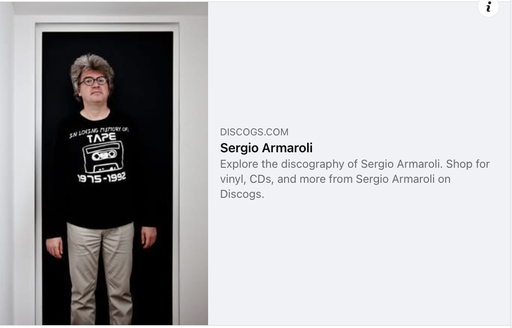


A collection of photos from the Estensioni Jazz Club Diffuso in Italy from March 4, 2023 to December 29, 2023
featuring


Sono tre talenti della musica contemporanea, del jazz e non solo. Sergio Armaroli, vibrafonista, percussionista, compositore, didatta e artista totale, non è tipo da amare i confini. Specie in ambito artistico. Si dichiara pittore, percussionista concreto, poeta frammentario e artista sonoro e si esprime con un jazz basato sull’improvvisazione totale intesa come “composizione istantanea” e insieme la sua scrittura è fatta di gesti poetici, tutti da interpretare da parte di chi lo sostiene nei suoi sforzi. È autore di numerosi album – citiamo almeno Prayer And Request (2010), Vacancy In The Park con l’Axis Quartet (2015) e Deconstructing Monk In Africa (2021, con Giancarlo Schiaffini) – e ha collaborato con jazzisti del panorama free jazz e compositori di musica contemporanea come Alvin Curran, Billy Lester, Walter Prati, Roger Turner e John Pope.
Francesca Gemmo, pianista, compositrice e didatta, si muove da anni soprattutto nell’ambito della musica contemporanea e della sperimentazione, collaborando con personaggi di primo piano come Alvin Curran, Brunhild Meyer Ferrari, Steve Piccolo, Walter Prati ed Elliott Sharp. Le sue composizioni hanno avuto interpreti di pregio come Irvine Arditti, il Trio Matisse, Luca Avanzi e Magnus Andersson. Ha scritto saggi di argomento musicale e pubblicato gli album Ad Libitum (2019) e Contours (2020, con Daniel Kientzy). Giovanni Maier è uno dei massimi esponenti del contrabbasso jazz in Italia, ha suonato in tutto il mondo con musicisti di fama internazionale come Cecil Taylor, Anthony Braxton, Roswell Rudd, Franco D’Andrea, Tim Berne, Tristan Honsinger, Enrico Rava, Gianluigi Trovesi, Richard Galliano e molti altri.
Insieme, senza nessun ulteriore contributo, hanno pubblicato contemporaneamente tre album. Armaroli partecipa e compone la quasi totalità dei brani di Figure(s) a due che lo vede affiancato da Maier e di Figure(s) a tre con lo stesso contrabbassista e Gemmo, la quale, con il solo Maier, propone Stringsland, che offre undici sue composizioni.
«Armaroli insiste sul concetto di “figure”, qui dall’una alla dodicesima, per sottolineare quanto ogni traccia – si salva solo John Coltrane, India – sia costruita su un piccolo frammento melodico», scrive Davide Ielmini nelle note di copertina. Ispirate a due album celebri datati 1977 del vibrafonista Walt Dickerson e del bassista Richard Davis, intitolati Tenderness e Divine Gemini, vede i nostri lavorare su frammenti sonori minimali, rielaborarli e macerarli, farli oggetto di continui ripensamenti e di linee espansive seghettate e sghembe, eppure spesso godibili e nitide.
È un ambito aereo e cameristico, ma la percezione arriva nel profondo, come la luce dei lampi si percepisce anche a palpebre abbassate, gli schizzi scorrono con un’intensità impressionante perché non fa appello a nessun facile artificio. Le Figure scritte da Armaroli sono modelli o incipit per l’improvvisazione, trampolini verso forme o figure melodiche elastiche e orizzontali, tracce di una nuova sollecitazione a inventare nell’attimo in cui si suona.
Se Dickerson tradusse il linguaggio di Coltrane sul vibrafono, come afferma Armaroli, che ripropone India, un evergreen di Trane, come tredicesima “figura”, i nostri due musicisti ne rielaborano il linguaggio in funzione delle loro potenzialità di micronarratori. Sono specialisti in racconti, disdegnano i lunghi percorsi, sanno essere delicati sui temi più fragili, sanno definire atmosfere più architettoniche pur mantenendo le strutture in bilico, sanno trovare fraseggi nervosi, traiettorie urgenti, pulsioni rugose. Potrebbero essere accolti come membri ad honorem della St. John Coltrane African Orthodox Church – che a San Francisco venera il sassofonista della Carolina del Nord come un santo – dato che i loro brani possono essere ascoltati anche come delle meditazioni sull’intensità spirituale del suo fare musica.
Ripartiamo dall’ottimo Ielmini: «L’infinito musicale di Sergio Armaroli sta in quattro parole: dettagli, improvvisazione, microcosmo e gioco. L’infinito come lo pensava Béla Bartók, che ritraeva nello stesso tempo l’uomo e le sue ombre. Avvistando nell’incontro speculare tra alba (qui, le note pungenti del vibrafono di Armaroli e quelle cristalline del pianoforte di Gemmo) e tramonto (la timbrica scura e legnosa del contrabbasso di Maier) il brulicare della vita microcosmica.
È l’infinito di György Kurtág, che con l’opera Játékok (“giochi”), piega alla propria fantasia un’immagine del suono che sta in un divertimento.»
Ovvero nelle “figure a tre”, con tutti i nostri protagonisti in azione, il riferimento si sposta dal jazz coltraniano
alla musica contemporanea del compositore ungherese di origine romena che oggi ha 98 anni e che è uno dei prosecutori dell’opera di Anton Webern in
chiave post-dodecafonica. Il risultato sono 12 Figure (dalla numero 13 alla 24, dopo le altrettante del precedente cd) dalle trame sonore filiformi, con le note che sono pietre
miliari all’interno di un melodismo amplissimo e di variazioni armoniche continue, dove i tre strumenti si inseriscono come traiettorie, come slanci, come graffi, sulle dilatazioni asimmetriche
altrui.
A metà tra improvvisazione free e scrittura
astratta, il gioco degli interplay strumentali diventa di volta in volta nebuloso oppure schizofrenico, atemporale oppure soporifero, problematico oppure oscuro,
in cui il jazz appare come ospite benvoluto e insieme come convitato flessibile e adattabile. Visioni in cui ogni ascoltatore cattura il proprio vissuto e da cui trae emozioni spesso
inesprimibili, quelle del trio, si immergono infine in sette frammenti dello stesso Kurtág, che aiutano a capire che base abbia l’ispirazione delle Figure e quanto esse ne
siano uno sviluppo intenso, intelligente nei fraseggi e dovizioso nei dettagli.

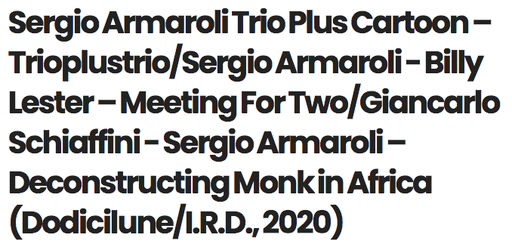
Vibrafonista, compositore e didatta, ma anche pittore e poeta, Sergio Armaroli è un artista totale, il cui eclettismo lo ha condotto a spaziare attraverso ambiti differenti ed, in particolare, a proiettare il linguaggio del jazz e dell’improvvisazione verso il futuro, esplorando nuovi sentieri nell’ambito della ricerca musicale e compositiva. A riguardo afferma: “Considero il jazz come attitudine propriamente sperimentale che ha assoluta necessità di essere raccontata”. A caratterizzare la sua cifra stilistica è certamente la sua scrittura, vibrante di una consapevolezza nell’essere produttore “di-segni” ma anche inventore di “gesti poetici” tradotti in musica.
Formatosi presso l'Accademia di Belle Arti di Brera e il Conservatorio Giuseppe Verdi di Milano ma anche accanto a Joey Baron, Han Bennink, Trilok Gurtu e Dom Um Romao, Schiaffini vanta un articolato percorso artistico che, nell’ultimo decennio, si è intrecciato con quello della lungimirante etichetta salentina Dodicilune con la quale ha messo in fila dischi di grande spessore come “Tecrit” in collaborazione con Riccardo Sinigaglia nel 2014, “Vacancy in the Park” con Axis Quartet nel 2015, “Micro and More Exercises” con Giancarlo Schiaffini nel 2016, “From The Alvin Curran Fakebook - The Biella Sessions” con il quartetto guidato da Alvin Curran, "To play Standard(s) Amnesia" con il suo quintetto e Billy Lester nel 2017 e "Close (your) Eyes Open Your Mind" con Walter Prati e "Trigonos" con Andrea Centazzo e Giancarlo Schiaffini nel 2018. A distanza di due anni da quest’ultimo, Armaroli torna con un altro lavoro sorprendente “TrioPlusTrio”, album nel quale ha raccolto sei composizioni originali in cui, per la prima volta, utilizza il vibrafono preparato, accompagnato da due formazioni in trio che si alternano al suo fianco e si confrontano. Il trio italiano nel quale il vibrafonista è accompagnato da Giancarlo Schiaffini al trombone e Walter Prati al violoncello, dà vita ad un imperdibile dialogo, tutto giocato sulle asimmetrie, con il trio Cartoon composto da Roger Turner (batteria e percussioni), Chris Biscoe (sassofono e clarinetto) e John Pope (contrabbasso), tre assi dell’improvvisazione musicale inglese. In questo senso, ascoltando il disco colpisce l’approccio musique concrète con cui Armaroli esplora le possibili vie di uscita dall’accordatura temperata e dalle sue timbriche pure per approdare a sonorità divergenti.
A spiccare è, inoltre, il sinergico interplay tra i tre strumentisti italiani che diventa ancor più ricco ed articolato nel sestetto, facendo emergere tutto non solo il collettivo ma anche le singole voci strumentali come nel caso dei brillanti interventi di Schiaffini, delle esplosive incursioni del sax di Biscoe e delle tessiture melodiche dense di lirismo del vibrafono di Armaroli. Determinante appare anche il contributo del contrabbasso di Pope come del violoncello elettroacustico di Prati che si integrano alla perfezione con le costruzioni ritmiche di Turner. Ad aprire il disco sono i tre strumentisti inglesi i quali con la superba “TrioPlusTrio 1”ci introducono alla lunga sequenza di quattro brani in cui i sei musicisti si danno battaglia improvvisando negli studi "Il pollaio" di Ronco Biellese con la supervisione del sound engineer Piergiorgio Miotto. Insomma, un lavoro magmatico, impreziosito dal bellissimo booklet con le fotografie di Roberto Masotti dedicate agli oggetti di questa musica preparata: “oggetti d'affezione per una musica preparata e altra”. A breve distanza, Armaroli ha dato alle stampe un altro lavoro intrigante “Meeting for two”, nel quale il compositore e vibrafonista incontra il pianista statunitense Billy Lester, improvvisatore istintivo e in grado di esprimere un raro lirismo sia nelle composizioni originali, quanto nelle riletture degli standard. L’ascolto svela undici brani di cui nove originali che spaziano dal sound jazz classico dell’iniziale “Billie’s bounce” dal repertorio di Charlie Parker, alle sperimentazioni delle brillanti ed originali composizioni di Lester come nel caso di “G minor jazz”, “Out of Gs and As” e “Peachfuzz parade”, nelle quali colpisce la ricercatezza delle soluzioni armoniche in cui ritroviamo stilemi che rimandano a Lennie Tristano e Thelonius Monk, per toccare l’imprevedibilità dell’improvvisazione di “Grassopher’s holiday”. Non manca un gustosa versione dai tratti intimi di “Darn that dream” e un brano come “Not easy (to love)”, composto a quattro mani e in cui si sviluppa una dinamica incredibile tra le due voci strumentali: pianoforte e vibrafono che ora dialogano, ora si alternano nelle parti soliste. I vertici del disco vanno ritracciati in “Billy is with me” e nella title-track”, entrambe firmate da Armaroli che, in questo album abbandona per un attimo l’avanguardia tornando in grande stile nei territori del jazz contemporaneo.
Ad inizio 2021, Sergio Armaroli (balafon cromatico, water drum, calebasse, talking drum, mbira, shaker(s), bull-roarer, percussion) è tornato ad incrociare i suoi strumenti con il trombonista Giancarlo Schiaffini, riformando il duo per dare vita a “Deconstructing Monk in Africa” album che raccoglie la lunga suite di quasi un ora in cui Thelonius Monk e la tradizione musicale africana incontro all’avanguardia Europea. Se a prima vista potrebbe sembrare che un semplice omaggio a Thelonius Monk, l’ascolto rivela dieci blues che sono l’ispirazione per dare vita ad una ricerca sonora a tutto campo che dalle poliritmie africane si dipana attraverso i sentieri dell’elettronica. “La musica africana, oltre ai noti elementi ritmici, ha con il jazz altre caratteristiche comuni, come l'aspetto decisamente responsoriale e una certa ripetitività”, sottolineano i due compositori e musicisti nelle note di copertina. “Di Monk abbiamo voluto scegliere i Blues, curiosamente tutti nella tonalità di Si bemolle, spesso formati di un nucleo tematico semplice, con ampi spazi di respiro tipici del carattere africano del Jazz”, proseguono Schiaffini e Armaroli. “Una semplicità che a volte sconfina in un primigenio minimalismo che mai si riduce a una semplice ripetitività. Abbiamo scelto un organico strumentale falsamente etnico (balafon, mbira, talking drum e altro) in dialogo con il trombone, cercando un senso a questo divagare tra paesaggi sonori primari e motivi melodici segreti. Il lavoro improvvisativo si dipana quindi come una terza via fra i temi monkiani, quasi mai citati direttamente, e il flusso acusmatico preregistrato”. Le libere improvvisazioni attraverso i temi di Monk, opportunamente decostruiti, ci regalano momenti di grande musica come nel caso di “Straight No Chaser” e “Blue Monk”, “Misterioso” e “Something in Blue” che suggellano un disco di grande spessore da ascoltare con grande attenzione.
Salvatore Esposito

#129 par Pierre DURR





Todd McComb's Jazz Thoughts
Sergio Armaroli (vibraphone) has been quite prolific over the past few years, especially on Leo Records (but elsewhere as well). And Leo Records isn't selling CDs directly to the US anymore, due to customs changes, so that's unfortunate: They do have their own download portal, but it's from another era of selling lossy formats (so I don't do that...), and some general "classical" distribution as well, so their downloads are at the major retailers (but lacking written materials, alas). Anyway, after I selected Qobuz to hear Armaroli's latest album from Leo, the quartet Windows & Mirrors | Milano Dialogues — recorded in studio in Milan this past April, on two consecutive dates — I also found that it's been released on Harri Sjöström's Bandcamp.... And besides Sjöström (on soprano & sopranino saxophones), Armaroli (b.1972) is joined by Giancarlo Schiaffini (trombone) & Veli Kujala (accordion): The latter is a new addition, often serving to beef up the harmonic contexts behind Armaroli, but eventually undertaking some solos & interacting more like a horn at times, while the underlying trio had been developing a collective style already. Indeed they'd released Duos & Trios on Leo in 2020, and e.g. a quartet album with Andrea Centazzo, Orbits (on the restarted Ictus) also in 2020.... (Armaroli's recent releases on Leo include albums with Roger Turner & Elliott Sharp as well, so very different approaches....) Windows & Mirrors | Milano Dialogues seems like the most sophisticated release from Armaroli yet, though, at least in terms of textural investigations. And the group interactions do appear to be subtly orchestrated on vibes by Armaroli (who prior to undertaking these improv projects was apparently an orchestral musician...), often "supported" by Kujala as noted, with the two (senior) horn players engaging in general dialog across the dreamy, developing landscape. (The two suites, presumably reflecting the two dates, are Windows & Mirrors respectively, with Milano Dialogues apparently indicating an overall title.... The second suite is longer, the two combining for over an hour of music.) The resulting landscape can also seem relatively flat, i.e. with an immediate air of dodecaphony beginning the album, amid a relatively cacophonous interaction that actually comes to open more to lyricism as it unfolds: There's indeed a sense of dialog, of horns as characters in a sort of drama.... The different tracks also conjure their own sense of world, i.e. in the Braxtonian sense (via Joe Morris) of "locale," the shimmering vibes-accordion combo evoking recent Braxton sound worlds. In this, perhaps the most comparable album for me was instead In Search of Surprise, where I'd already noted the similarities to Braxton, the vibraphone there suggesting a sort of "diamond curtain wall" between the highly detailed horn articulations on either "side." Of course, Braxton is driving his scenarios from a reed, with the "middle" part coming from AI, while Armaroli is animating from the middle, but likewise with especially precise horn players articulating personalities in what can become a rather open interaction format.... (With Schindler, also very prolific, rather than the linearity of character drama, the music intensifies geometrically, into resonant clashes & a sort of vertical spectral-architectural interrogation.... The first track is thus the most similar, including "open" in its title, with the vibes player more of an addition to the existing horn duo.) With Braxton, of course there's also the Ghost Trance Music factor, i.e. its temporal interrelations, and that seems to remain in the realm of traditional dodecaphony for Milano Dialogues (i.e. without much time-concept), such that the latter never feels transformative: There's a series of intriguing textural interactions, and then they just end. (In contrast, e.g. Braxton's ZIM, with its otherwise similar textural explorations, is all transformation.... In fact, Sjöström's Move ensemble, e.g. Move in Moers as reviewed here in April 2021, is all transitions too.... Sjöström seems to have brought Kujala to this interaction as well, so he's an important factor here, but apparently not in terms of temporal form.) The underlying reference for me is then actually Lennie Tristano, flowing limpid melody in straightforward time signatures... subtly swinging, almost romantic at times. (Of course Tristano was a significant influence on Braxton, so this all tracks.) So I enjoy the general sound of instruments like vibes, trombone, accordion & soprano sax coming together... as well as the general moodiness, but I don't feel transformed by the listening here. It's a sophisticated effort, though, and seems to be building, i.e. through interweaving lines & slow resonances, various call-response textures... opening at times to the point of becoming diffuse (perhaps conjuring an intricately delicate mood). And then it moves on to the next window or mirror — i.e. still as a series of studies.
5 December 2022
Although it seems as though I only just reviewed vibraphonist Sergio Armaroli's Windows & Mirrors | Milano Dialogues (last December...), it also seems that there's more to say: I recently cited his basic sound world again in a review of Harri Sjöström's Due Mutabili (in September), and then finally took note of the "About Cage" series he curates for Da Vinci Classics (consequently updating my Number Pieces discussion last week...). And then Armaroli & colleagues continued to release albums from the same Windows & Mirrors sessions from April 2022: First there was More Windows & Small Mirrors | Milano Dialogues, part two (released this past February), involving the same quartet with Giancarlo Schiaffini & Veli Kujala, but more often in reduced formations (i.e. almost as an appendix to the prior quartet-focused album...). Now there's the generically named More Duos And Trios, released last month also on Leo Records, and recently appearing on streaming outlets: The title obviously references one of the earlier Armaroli recordings for Leo, Duos & Trios (released in 2020, as noted in my December 2022 review...), and does involve again that prior trio (i.e. without Kujala on accordion). And although the title sounds almost like an afterthought, More Duos And Trios ends up being the tightest release yet from this project! Whereas the first Duos & Trios seemed to be largely about integrating Sjöström into Armaroli's musical world (i.e. alongside Schiaffini, who appears e.g. on the Cage series, as well as with Armaroli for some of the releases in another extensive series, that one "jazzier" on the Italian Dodicilune label...), Windows & Mirrors | Milano Dialogues had then involved integrating Kujala, and ends up involving some relatively empty landscapes, spacious & hovering at times, also exploratory.... (Schiaffini on trombone had appeared as well on the other Armaroli quartet album that I reviewed in the interim, I Dream I Was An Earopean, recorded later in April 2022 with vocalist Phil Minton....) But More Duos And Trios is a second outing for the core trio, and usually ends up in strongly three-way interactions, i.e. exploring its basic reed & brass & vibes setup via increasingly sophisticated ensemble articulations.... Indeed it comes to recall In Search of Surprise (reviewed here in November 2021) from Udo Schindler & Etienne Rolin on horns, there contextualized by "adding" vibes at times (pace their duo followup, Plastic Narratives as mentioned in another February review...), generally punchier & more angular as well — as one of many prescient textural studies from Schindler. More Duos And Trios also continues to imply a sense of being "studies" then, i.e. with no real theme otherwise, various restarts for the tracks, simply coming to an end in time... but there're plenty of other recent explorations of this general sound world, lending a sense of centrality to Armaroli's work: When discussing both Windows & Mirrors & In Search of Surprise I'd noted the textural-structural similarities to Anthony Braxton's DCWM, i.e. two "horns" with worlds split-articulated across shimmering electronics — now for others, substituting shimmering vibes (possibly along with accordion, subsequently embraced by Braxton as well for ZIM...), with the basic resulting textures being increasingly interrogated across various musical contexts. Indeed, not only has Evan Parker been exploring similar combos (including with Armaroli himself, as previously noted...), but e.g. Steve Lehman & Ivo Perelman just released large ensemble albums augmenting a similar basic trio with vibraphone (although with trumpet, i.e. brass in higher register), respectively Ex Machina (with "orchestra," including electronics...) & Seven Skies Orchestra (with string trio). Perelman enjoyed the combo so much that he subsequently recorded the focused duo Tuning Forks with Matt Moran (as released in September), seemingly turning more toward spectral approaches around ringing metal.... But one thing those efforts do have in common, including from Braxton (who offers some different configurations as well...), is that they're driven by a reed player (including sometimes Sjöström...). With Armaroli though, it's more as if the "computer" (or continuo...) background is leading, so there's a different sense of structure, of articulating extended (temporal) tapestries.... (And these are also very long albums, most well over an hour, meaning that there's no shortage of ideas either.) More Duos And Trios is also, perhaps, the final release for Leo Records, an institution in this space. (It comes alongside the appealing Density For Solo Vibraphone(s), much less discrete in its rhythmic-dynamic articulations, making a round number of 10 releases for Leo by Armaroli....) And I'd already mentioned in the first Armaroli review how changes to commercial regulations left Leo unable to ship product to the US, and I guess he doesn't want to shift to more of an online context now, although as noted, his recent albums do appear at least on Qobuz.... That's unfortunate, but new music does continue.... And indeed Armaroli becomes one of the most prolific builders of what seems to be an important (technical, acoustic) sound world for the 2020s — so when does this "study" work yield more of an artistic statement per se? Armaroli's solo work may already be there, but that's not really my focus....
13 November 2023


Registrati in soli due giorni (1-2 maggio 2023) a Tavagnacco (Udine) dalla Dodicilune, questi tre album, pur molto diversi uno dall’altro, simboleggiano alcune delle possibili varianti (e variazioni) intraprese e combinate in duo e in trio da tre jazzisti d’avanguardia e sperimentazione come Giovanni Maier (contrabbasso), Sergio Armaroli (vibrafono) e Francesca Gemmo (pianoforte). Maier è onnipresente, anche in Stringsland a nome di Gemmo (sola in copertina), forse il disco più ostico del terzetto, per via del radicalismo della leader, protesa a tradurre il rapporto con il suono e il tempo in chiavi via via abrasive, dolci e movimentate. Per contro, Figure(s) a due risulta il cd più accogliente per l’ascolto grazie al costruttivo dialogo tra Armaroli e Maier, tradotto in 12 piacevoli original (più India di Coltrane). Infine Figure(s) a tre dimostra le potenzialità del gruppo, tra l’interplay equilibrato e le doti compositive di Armaroli a cui s’aggiungono le partiture di sette brevi pezzi del 98enne compositore ungherese György Kurtag, a sua volta soddisfattissimo del risultato. (Guido Michelone)
SERGIO ARMAROLI IN

Note:
(1) Armaroli è una presenza quasi fissa in Percorsi Musicali (qui trovi gli articoli, tra interviste, recensioni e riferimenti estetici). Di Centazzo questa rivista ha parlato parecchio in passato (vedi qui un profilo e qui alcune recensioni ante 2014). Il libro Bacchette Magiche ha avuto anche una promozione audiovisiva (vedi qui il passaggio a Erratum TV).


Questa notte parliamo del libro di Sergio Armaroli “Bacchette magiche. Conversazioni e divagazioni sulla percussione, l’arte, la vita con Andrea Centazzo” pubblicato da Manni.
Per l’occasione ascoltiamo un paio di brani dal ricco catalogo Ictus (l’etichetta dello stesso Centazzo) e due nuove uscite - in duo con Giovanni Maier e in trio con Maier e Francesca Gemmo - di Sergio Armaroli per Dodicilune Dischi.
SERGIO ARMAROLI/GIOVANNI MAIER, Figure # 1, da "Figure(s) a due" - Dodicilune Dischi // ARMAROLI/GEMMO/MAIER, Figure # 14, da "Figure(s) a tre" - Dodicilune Dischi //
01 Mar 2024

A multi-movement tapestry of shifting connections & musical layers, quartet The Art Of Sound(s) (recorded in Italy in November & December 2024) was released toward the end of last year. It appears to be the twentieth & final release in Hat Hut's First Visit series, although I didn't see a formal statement. (I've seen various statements about reorganizing Hat Hut in the past, including different distribution etc., but most of that ended up being temporary or transitional. This time it does appear, however, that the First Visit series was the end for founder Werner X. Uehlinger as executive producer, with subsequent releases — back in the traditional orange, versus the blue of First Visit — being produced by Melanie Imhof & Marco von Orelli.) And along with e.g. archival releases, the series includes e.g. multiple albums by vibraphonist Sergio Armaroli, including two scoring a "graphic novel" (A Very Heavy Person for quintet, expanding his trio with Elliott Sharp & Steve Piccolo, which also released Imaginary Songbook elsewhere, after two earlier albums on Leo Records...), plus trio At Sotto Il Mare with bassist Barry Guy & pianist Francesca Gemmo. Gemmo joins Armaroli again for The Art Of Sound(s) then, as do Pierre Favre & Andrea Centazzo, both listed on drums & percussion. (Both Favre & Gemmo have appeared as well in Armaroli's "About Cage" series for Da Vinci Records, e.g. all three for Four6 of Volume 9. Gemmo also appeared last year on First Visit for Tides in the Mirror with Magda Mayas.) The Art Of Sound(s) is then generally a percussive album, although lyrical too at times — even invoking genre, e.g. smooth jazz or romantic piano — perhaps analogous not so much to "vibes trio" DLW on their recent Live at Salle Cortot double album (reviewed in January), but more to SDLW as a quartet with pianist (& more genre evocations... as reviewed January 2023). DLW is still more syncopated though, e.g. per their Beats series. And then while I hadn't actually mentioned Favre (b.1937) — after various seminal outings (& e.g. with Samuel Blaser, a regular earlier in this space...) — he's appeared e.g. recently on a duo release with Centazzo (for Ictus Records, as two distinct albums recorded in 1977 & 2024), Endless Dialogues. Indeed, although the series being from the venerable "Hat" label family suggests a central role for Armaroli, it was Centazzo who convened this recording session i.e. after various releases with the former on Ictus, e.g. trios Steps with Harri Sjöström & Indian Summer with Gemmo (& with the trio leading a larger ensemble there...). Both albums were already surveyed here in the review (January 2024, already noting Armaroli specifically...) of quartet The Panda Session (involving Achim Kaufmann & Giancarlo Schiaffini, the latter also a frequent Armaroli collaborator, including for his Cage series, plus e.g. another quartet Orbits, noted there as well...) by Centazzo. (The most recent appearance for Centazzo in this space was then with quartet release A Night in Berlin, reviewed here last July, but now apparently withdrawn: That album has vanished from the web.... And then his latest release for Ictus is Octagonal Music, recorded in 2023 with Udo Schindler & featuring Elisabeth Harnik on church organ. Armaroli has a new release with Schindler too, the asynchronously recorded duo album Transalpine Sound Bridges from Sluchaj....) So I didn't end up diving into The Art Of Sound(s) last year, in part because I was waiting for more of an intro to the series, but also because the different movements here add up to more of an anthology of textural explorations, e.g. not unlike Armaroli's More Duos And Trios (reviewed here November 2023, also with Sjöström & Schiaffini), one of the final (or so it seemed?) releases for Leo as well. In any case, it's fortunate that e.g. the "two drummer backbone" can now be auditioned separately (i.e. on Endless Dialogues) & that these four musicians can be heard already (in general) in so many different combos, because The Art Of Sound(s) is immediately a dense album with what can seem opaque textures, sometimes opening only slowly to the ear... albeit featuring more popularistic (& texturally reduced) interactions for some later tracks-movements too. The overall result is something of a collage then, jazzy (or classical...) at times, but also developing stranger senses of four-way interaction at others, e.g. with a haze of shimmering overtones (although never seeming e.g. Balinese... i.e. still projecting a very European sense of line). Different tracks may suggest different leadership though, and certainly evoke different moods.
6 April 2026